You Won’t Believe This Hidden Architecture in Baucau, East Timor
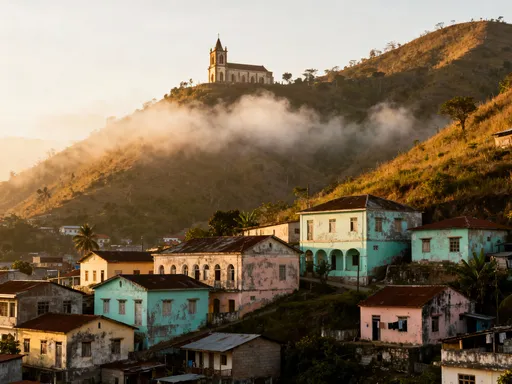
Nestled in the hills of East Timor, Baucau is a place most travelers overlook — but its architecture will stop you in your tracks. Weathered colonial buildings, hand-built churches, and homes painted in fading pastels cling to steep slopes like something out of a dream. I came for the peace, but stayed for the stories these walls tell. This isn’t just a sleepy town; it’s a living museum of resilience, culture, and quiet beauty. Every cracked tile, every rusted iron gate, every hand-carved wooden beam speaks of a history shaped by faith, resistance, and the quiet determination of everyday life. In Baucau, the buildings are not merely structures — they are witnesses, storytellers, and keepers of memory.
First Impressions: Arriving in Baucau
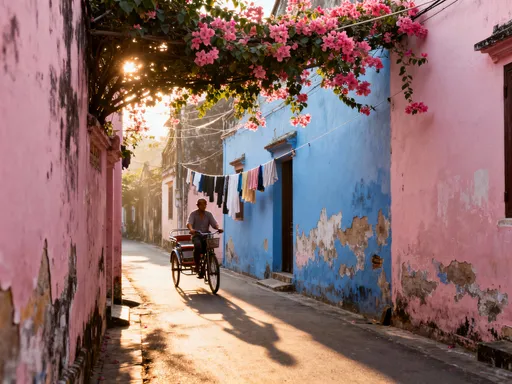
The journey from Dili to Baucau unfolds like a slow revelation. As the capital’s modest bustle fades behind, the coastal highway climbs into rolling green hills, where terraced fields and scattered eucalyptus trees stretch toward the sky. The road winds sharply, revealing sudden drops into valleys and glimpses of the shimmering Wetar Strait below. After about two hours, the silhouette of Baucau emerges — a cluster of rooftops clinging to steep slopes, painted in soft pinks, blues, and yellows, as if dropped gently onto the mountainside by an unseen hand.
What strikes most visitors is the contrast between Baucau’s reputation and its visual presence. Often described as East Timor’s ‘second city,’ it carries none of the hurried energy one might expect. Instead, there’s a hush, a sense of time moving at its own pace. The urban layout defies conventional planning — narrow alleys zigzag between homes, staircases appear without warning, and streets often end in small plazas with nothing but a bench and a view. Yet, this irregularity is part of its charm. There’s no grand design, only adaptation — to the land, to history, to life as it is lived.
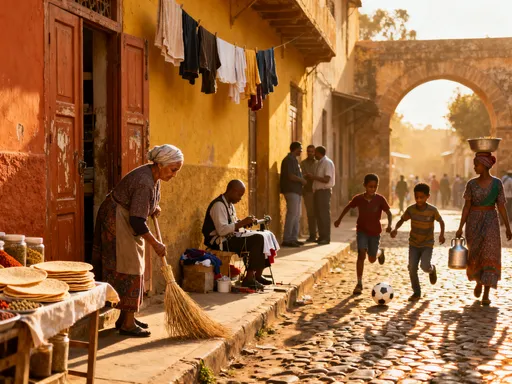
The air is cooler here, carrying the scent of wood smoke and frangipani. Roosters crow from backyards, children pedal bicycles down steep inclines, and elders sit in doorways, watching the day unfold. It’s a town that reveals itself gradually, not through landmarks or signs, but through moments — a patch of hand-painted tiles on a crumbling wall, a church bell ringing at noon, the sudden appearance of a colonial-era balcony wrapped in bougainvillea. Baucau does not announce itself. It invites you in.
Portuguese Echoes: Colonial Structures That Still Stand
Baucau’s architectural soul bears the imprint of nearly five centuries of Portuguese influence, most visibly in its surviving colonial buildings. Though many were damaged during periods of conflict, particularly in the late 20th century, several structures remain as quiet testaments to a complex past. Along the lower slopes near the old port area, one can still find remnants of administrative offices, warehouses, and residential homes built between the 1800s and mid-1900s. These buildings feature thick stone walls, arched doorways, and red-tiled roofs — classic markers of Lusitanian design adapted to tropical conditions.
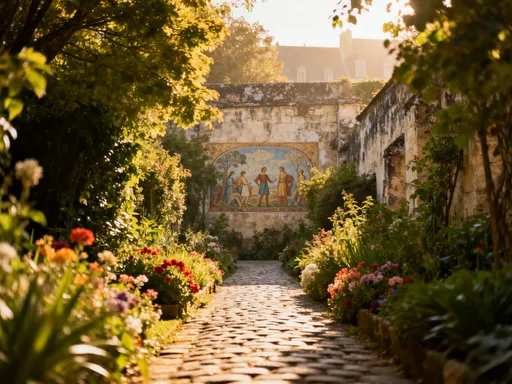
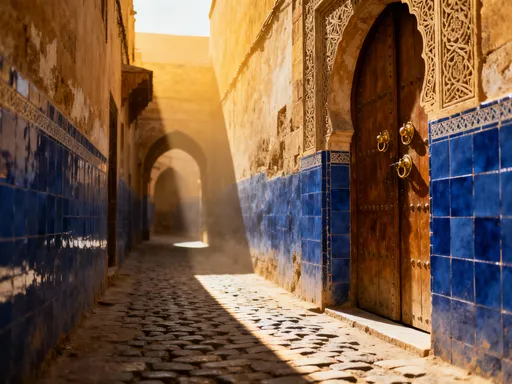
What makes these structures remarkable is not their grandeur, but their endurance. Some have been carefully restored, their facades repainted in ochre and white, their wooden shutters freshly oiled. Others stand in various states of decay — windows boarded up, roofs partially collapsed, vines creeping through broken masonry. Yet even in ruin, they possess a dignified presence. The use of imported ceramic tiles, known locally as azulejos, on some exterior walls adds a touch of artistry, their floral patterns now faded but still legible.
These buildings are more than relics; they are part of a layered narrative. During Portuguese rule, Baucau served as an administrative and commercial hub, second only to Dili. The port facilitated trade in coffee, sandalwood, and beeswax, and the town grew around these economic activities. The architecture reflects that era — functional, yet infused with a sense of order and aesthetic care. Today, their survival is symbolic. In a nation that gained independence in 2002 after decades of struggle, these structures represent continuity. They are not glorified, nor are they erased. Instead, they are integrated — repurposed as homes, shops, or community spaces — a quiet acknowledgment of history without surrendering to it.
Sacred Spaces: Unique Church Designs in a Catholic Stronghold
Religion is woven into the fabric of daily life in East Timor, and nowhere is this more evident than in Baucau’s churches. As one of the most Catholic nations in Asia, East Timor’s spiritual identity is deeply tied to its architecture, and Baucau offers some of the most compelling examples. The city’s main cathedral, perched on a central hill, is a striking blend of modern construction and traditional craftsmanship. Its tall bell tower rises above the rooftops, visible from nearly every corner of town, while the interior features exposed wooden beams, stained glass depicting local saints, and a sanctuary painted in deep blues and golds.
But the cathedral is only the beginning. Scattered across the hills are smaller chapels and parish churches, often built by local communities with limited resources but immense devotion. One such chapel, located in the neighborhood of Vila Verde, features an open-air nave — a design choice both practical and symbolic. The lack of walls allows breezes to flow through, offering relief from the heat, while also creating a sense of inclusivity, as if worship extends beyond the building itself. The altars are often hand-painted, adorned with bright flowers, candles, and photographs of loved ones, blending personal memory with collective faith.
These sacred spaces serve more than religious functions. They are centers of community life — places where families gather for baptisms, weddings, and funerals; where youth groups meet; where elders share stories after mass. The architecture reflects this dual role. Many churches include wide verandas, shaded courtyards, and adjacent halls used for meetings and meals. In Baucau, the church is not separate from life — it is part of it. The design choices, from the orientation of the altar to the use of natural materials, reflect a deep understanding of place and purpose. To visit these spaces is to witness faith not as doctrine, but as lived experience.
Local Ingenuity: Vernacular Homes and Urban Adaptation
While colonial buildings and churches capture much attention, the true architectural heartbeat of Baucau lies in its everyday homes. Here, necessity has given rise to innovation. With limited access to standardized building materials and a landscape defined by steep inclines, residents have developed a vernacular style that is both functional and expressive. Most homes are built from concrete blocks, corrugated metal roofs, and salvaged wood, yet each carries the mark of individuality.
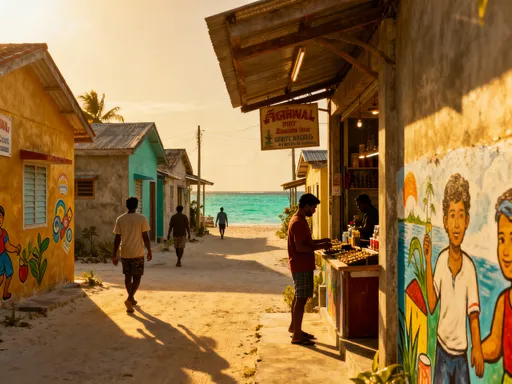
Terraced foundations are common, with homes stacked one above the other, connected by narrow staircases and footpaths. Some houses are accessed only by steep, winding paths, making deliveries and daily movement a physical challenge. Yet, these constraints have inspired creativity. Rooftop gardens flourish with tomatoes, herbs, and chili peppers. Door frames are painted in vibrant colors — turquoise, coral, lime green — often with hand-painted numbers or names. Laundry lines crisscross between buildings, and small shrines or potted plants mark thresholds, adding warmth to otherwise modest facades.
What stands out is the balance between practicality and personal expression. A metal roof may be patched with pieces of old signage, but the edges are neatly trimmed. A concrete wall may be unfinished, but it’s adorned with a framed photo or a wind chime. Windows, often small for privacy and heat control, are framed with painted trim. These details are not incidental — they reflect pride, identity, and a quiet resistance to uniformity. In a country still rebuilding its infrastructure, these homes demonstrate resilience not through grand gestures, but through daily acts of care and adaptation.
Forgotten Gems: Overlooked Buildings With Stories to Tell
Beyond the churches and colonial homes lie structures that time has quietly forgotten. An abandoned cinema on Rua de Santo António sits in silence, its marquee long gone, its entrance blocked by overgrowth. Locals recall that it once showed Portuguese films and occasional Indonesian broadcasts, a rare source of entertainment in the 1970s and 80s. Today, its Art Deco façade remains, with geometric stucco patterns and a curved corner that once welcomed crowds. Inside, the floor is littered with debris, but the high ceiling and remnants of ornate moldings suggest what once was.
Not far away, the former seminary on the eastern hillside stands as another quiet monument. Once a training ground for local priests, it was damaged during the 1999 violence and has since been only partially restored. Its long corridors and arched windows evoke a sense of solemnity, while the surrounding gardens, now overgrown, still bloom with jasmine and hibiscus. Elderly residents remember the sound of chanting at dawn, the rustle of cassocks on stone paths. Though no longer active, the building remains a place of reverence — not for worship, but for memory.
Another overlooked site is the old municipal market near the port. Once a bustling hub of commerce, it now operates only on weekends, its concrete stalls mostly empty. Yet the structure itself — with its high ceiling, latticed ventilation panels, and central courtyard — reveals thoughtful design for airflow and crowd movement. Vendors who still use the space speak of better days, of fish arriving at sunrise, of coffee traders from the highlands. These buildings, though diminished, are not meaningless. They are archives in brick and mortar, holding stories of community, economy, and change. To walk through them is to listen — not with ears, but with presence.
Why Baucau’s Architecture Matters: Culture, Identity, and Memory
The architecture of Baucau is not merely a collection of old buildings. It is a living record of East Timor’s journey — from colonization to occupation, from resistance to independence. Each structure, whether intact or in ruins, carries a piece of that story. The colonial buildings remind of a past that cannot be erased, only reinterpreted. The churches reflect a spiritual anchor that sustained a people through hardship. The vernacular homes embody the quiet strength of ordinary families rebuilding their lives.
In a world where modernization often means erasure, Baucau offers a different model — one where the old and new coexist. New concrete homes rise beside century-old walls. Solar panels are installed on tile roofs. Young people use smartphones on stone steps where their grandparents once sat. This blending is not chaotic; it is organic. It reflects a society that honors its past without being trapped by it.
Preserving Baucau’s architecture is not about creating a museum piece. It is about recognizing that buildings shape identity. When a child grows up seeing hand-painted doors and church spires against the sky, they learn that beauty and meaning are part of daily life. When a visitor walks through a colonial alleyway and hears a local story, they understand that history is not distant — it is lived. In this way, architecture becomes education, connection, and healing. It is not just about saving walls — it is about sustaining a sense of self.
How to Experience Baucau’s Architecture Responsibly
To truly appreciate Baucau’s architectural heritage, one must approach it with respect and intention. The best way to explore is on foot. The city’s hilly terrain rewards slow movement, allowing time to notice details — a carved lintel, a patch of original tile, a flower blooming from a crack in the wall. Comfortable walking shoes, a reusable water bottle, and a light hat are essential. Early morning or late afternoon offers the best light for photography and the most comfortable temperatures.
Photography should be done with care. Always ask permission before photographing people or private homes. While many residents are welcoming, it is important to remember that this is not a stage — it is a lived environment. When photographing churches or religious sites, be mindful of ongoing services and avoid using flash near altars or sacred objects. The goal is not to capture perfect images, but to document with dignity.
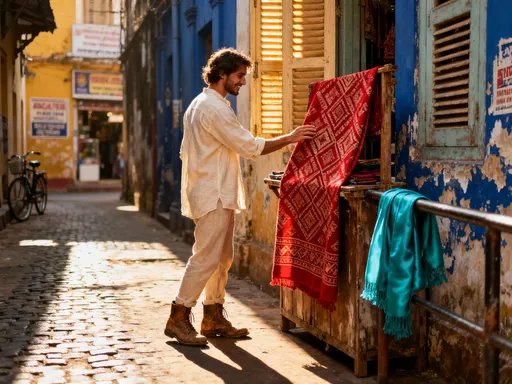
Engaging with locals enriches the experience immeasurably. Simple greetings in Tetum — such as Bom dia (good morning) or Ola (hello) — go a long way. If invited into a home or shop, accept with gratitude. Many elders are eager to share stories, especially about how the town has changed. Consider hiring a local guide, particularly one affiliated with a community-based tourism initiative. These guides offer not just facts, but context — explaining not only what a building is, but what it means.
Transportation within Baucau is limited. While some visitors rent scooters, the steep roads and narrow paths make walking the safest and most rewarding option. For longer distances, pickup taxis — shared minibuses — operate on fixed routes and are an affordable way to travel. The best time to visit is during the dry season, from May to November, when skies are clear and roads are passable. Avoid the rainy season if planning extensive walking, as paths can become slippery and muddy.
Supporting local businesses is a form of preservation. Purchase coffee from family-run farms, eat at small tascas (local eateries), and buy handmade crafts when available. These acts sustain the community and ensure that the culture behind the architecture continues to thrive. Remember, tourism in Baucau is not about consumption — it is about connection.
Conclusion
Baucau doesn’t shout for attention — it whispers. Its architecture, shaped by history, hardship, and hope, invites slow looking and deeper understanding. In a world obsessed with the new, this quiet city reminds us that beauty often lives in the weathered, the handmade, and the enduring. To walk its streets is to witness a nation still building itself — one wall, one story, one sunrise at a time. There are no crowds, no souvenir stands, no filtered illusions. There is only the truth of place — raw, real, and resonant. For those willing to listen, Baucau offers more than sights. It offers silence, space, and the rare gift of seeing not just a town, but a soul.