You Won’t Believe What’s Hiding in This Chilean Town’s Art Spaces
Punta Arenas isn’t just about glaciers and penguins—trust me, I was surprised too. Tucked in the southern tip of Chile, this windswept port city holds a creative pulse few expect. I stumbled on vibrant murals, intimate galleries, and community studios breathing life into old buildings. It’s raw, real, and quietly revolutionary. If you think Patagonia’s only for hikers, think again. The art scene here doesn’t shout—it whispers stories of identity, resilience, and place. And honestly? It might be the most authentic cultural experience in the region.
Reimagining Punta Arenas: Beyond the Gateway to Patagonia
Punta Arenas has long been viewed as a transit point—a place to refuel before venturing deeper into the vast wilderness of Patagonia or boarding a ship toward Antarctica. Travelers often pass through quickly, eyes fixed on the horizon, unaware of the quiet cultural renaissance unfolding in plain sight. Yet this city of just over 120,000 residents is far more than a logistical stop. Its identity is deeply shaped by isolation, maritime history, and a resilient spirit forged by relentless winds and long winters. These very conditions have given rise to a unique artistic voice—one that speaks not of escape, but of rootedness.
The city’s architecture reflects layers of history: European-style facades from its 19th-century wool boom, weathered wooden houses with corrugated roofs, and broad avenues that seem to stretch endlessly under open skies. It’s a place where time moves differently, where conversations happen slowly, and where creativity has room to grow without the pressures of mainstream trends. Artists here aren’t chasing global fame; they’re responding to their environment, asking what it means to belong at the edge of the world. This introspective energy infuses everything from poetry readings to textile installations, making Punta Arenas not just a gateway, but a destination with its own narrative depth.
What sets the city apart is its authenticity. There are no tourist traps masquerading as art districts, no overpriced boutiques selling mass-produced souvenirs. Instead, creativity thrives in repurposed spaces—old warehouses, forgotten storefronts, even shipping containers—transformed by local hands into intimate venues for expression. The art isn’t curated for outsiders; it’s made for neighbors, for conversations over mate tea, for the quiet pride of telling stories that might otherwise be overlooked. In choosing to see Punta Arenas on its own terms, visitors gain access to something rare: a cultural heartbeat that beats steadily, without fanfare.
The Rise of Grassroots Art in a Remote Port City
Art in Punta Arenas didn’t emerge from grand institutions or government mandates. It grew organically, like moss on stone, nurtured by necessity and a deep sense of place. For decades, the city’s economy relied heavily on sheep farming and maritime trade, but as those industries shifted, so did the community’s identity. Young people left for opportunities elsewhere, and older generations watched their traditions fade. In response, a new wave of creatives began using art as both memory and resistance—a way to preserve what was vanishing while imagining what could come next.
Geographic isolation, often seen as a limitation, became an unexpected advantage. Without constant exposure to international art markets or urban trends, local artists developed a distinct visual language rooted in Magellanic culture. Themes of migration, survival, and environmental change recur throughout their work, reflecting the realities of life so close to Antarctica. This art is not decorative; it’s functional in the deepest sense—it helps people make sense of who they are and where they come from.
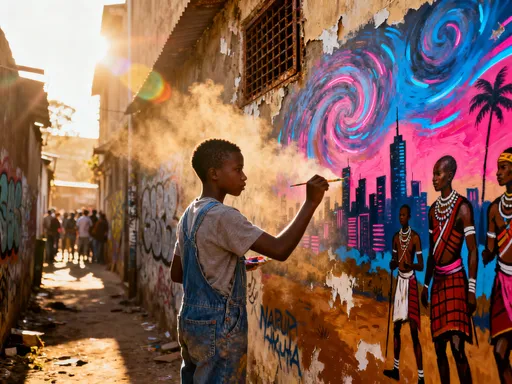
Community-driven initiatives have played a crucial role in this transformation. Without relying on major funding or international curators, residents have taken ownership of public spaces, turning neglected corners into open-air galleries. Old factory walls now display large-scale murals depicting indigenous Selk’nam symbols, while abandoned railway stations host rotating exhibitions of photography and sculpture. These efforts are not about gentrification or commercial gain—they’re about reclamation. By transforming forgotten structures into places of meaning, artists are rewriting the city’s story from the ground up.
What’s most striking is the collaborative spirit that defines this movement. Artists work alongside teachers, fishermen, elders, and students, creating projects that reflect collective memory rather than individual genius. Workshops on traditional weaving techniques are held in school basements; poetry slams take place in community centers; and public art installations often involve input from entire neighborhoods. This inclusivity ensures that art remains accessible, relevant, and deeply woven into the fabric of daily life.
Walking the Walls: Street Art as Urban Storytelling
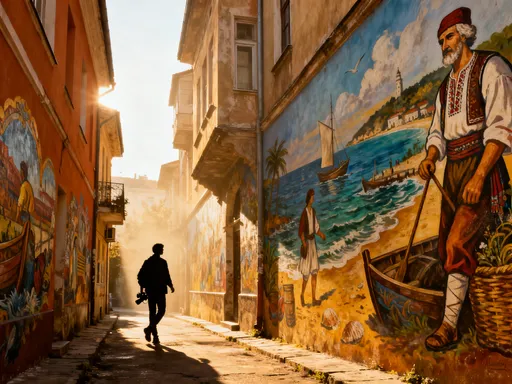
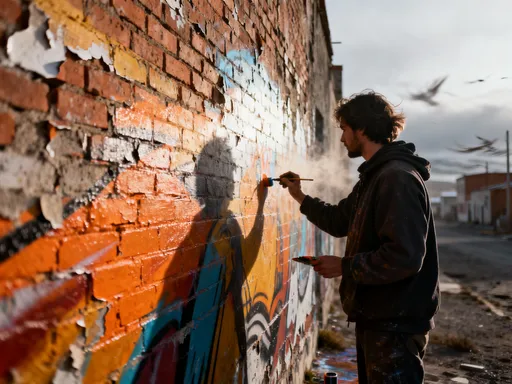
One of the most powerful expressions of Punta Arenas’ creative awakening can be found on its streets. The city’s gray façades, battered by years of wind and salt spray, have become canvases for bold, emotionally charged murals. Unlike the flashy graffiti seen in larger cities, these works are deliberate, narrative-rich, and deeply connected to local history. A walk through the downtown grid reveals a visual chronicle of the region’s past and present—from the legacy of early European settlers to the enduring presence of indigenous peoples and the fragile beauty of the surrounding ecosystems.
Along Avenida Colón, one of the city’s main thoroughfares, a striking mural spans the side of a former bank building. It depicts a woman wrapped in a traditional woolen shawl, her face partially obscured by a storm cloud shaped like a ship’s prow. The image evokes the countless women who waited for loved ones at sea, their lives marked by uncertainty and endurance. Nearby, another wall shows a cascade of native birds—kelp geese, Magellanic woodpeckers, and Andean condors—flying toward a horizon where land meets ice. These are not random decorations; they are acts of remembrance, each brushstroke a tribute to the natural and human worlds that define this place.
What makes the street art scene especially compelling is its dialogue with the environment. The ever-changing Patagonian light—sometimes soft and golden, other times harsh and silvery—alters the mood of the murals throughout the day. On overcast afternoons, the colors seem to glow with an inner warmth, offering a visual counterpoint to the chill in the air. In this way, the art doesn’t just exist in the city; it interacts with it, responding to weather, time, and human movement.
Many of the murals also carry environmental messages, reflecting growing awareness of climate change’s impact on the region. One powerful piece near the port shows a melting glacier forming the shape of a human hand, fingers dissolving into water. Another illustrates a whale skeleton emerging from the earth, its bones inscribed with names of extinct species. These works don’t preach; they invite contemplation. They ask viewers to consider their relationship with nature, to recognize that even in one of the most remote places on Earth, human actions have consequences.
Hidden Galleries and Intimate Exhibition Spaces
Beyond the streets, Punta Arenas is home to a network of small, independent galleries that defy conventional expectations. These spaces are not found in sleek downtown complexes but tucked into converted homes, former shops, and even repurposed garages. Their unassuming exteriors give no hint of the richness within, making each visit feel like a discovery. There are no entry fees, no security guards, and rarely more than a handful of visitors at a time—just artists, neighbors, and curious travelers sharing quiet conversations about color, form, and meaning.
One such gallery occupies a century-old wooden house near Plaza Muñoz Gamero. Inside, the scent of pine lingers in the air, and sunlight filters through lace curtains onto hand-carved sculptures made from lenga and ñirre wood—species native to the southern forests. The current exhibition features works by a local painter who spent months traveling with sheepherders, capturing their daily lives in oil on canvas. Her portraits are unidealized: faces weathered by wind, hands calloused from work, eyes that hold both fatigue and dignity. What strikes visitors most is the intimacy of the scenes—the way a simple moment, like mending a fence or boiling water over a fire, is rendered with reverence.
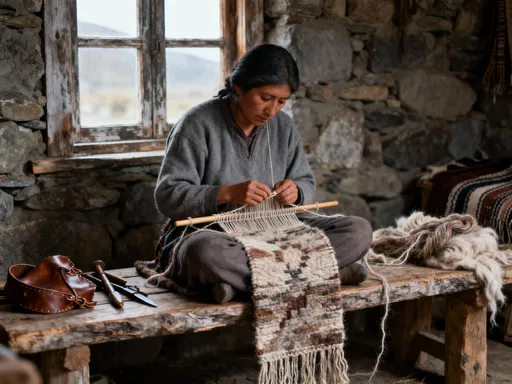
Another space, located in a former tailor’s shop, specializes in textile art. Bolts of wool fabric line the shelves, dyed with natural pigments from local plants. On display are intricate tapestries that blend Mapuche patterns with contemporary designs, each piece telling a story of cultural fusion and continuity. The artist, a third-generation weaver, often sits in the back room during opening hours, demonstrating her technique to visitors. She explains how her grandmother taught her to spin yarn by hand, and how those early lessons shaped her understanding of patience and precision.
Photography also holds a prominent place in these intimate venues. Exhibits frequently showcase black-and-white images of vanished landscapes—abandoned homesteads, crumbling lighthouses, empty train tracks swallowed by grass. These photographs are not merely nostalgic; they serve as historical documents, preserving memories that might otherwise fade. Many artists emphasize sustainability in their practice, using recycled materials, low-impact dyes, and locally sourced tools. This commitment to ecological responsibility mirrors the broader ethos of the community: to create beauty without exploitation, to honor the past while building a more thoughtful future.
Cultural Hubs: Where Art Meets Community Life
In Punta Arenas, art is not confined to galleries or special events—it is woven into the rhythm of everyday life. This integration is most evident in the city’s cultural hubs, multidisciplinary spaces where creativity intersects with education, performance, and civic engagement. These centers, often run by nonprofit organizations or supported by municipal programs, serve as gathering places for all ages and backgrounds. They are not exclusive or intimidating; they are warm, welcoming, and deeply embedded in the neighborhood.
One such hub operates out of a renovated theater building that once hosted traveling European troupes in the early 1900s. Today, it functions as a dynamic arts center offering weekly workshops in painting, poetry, and traditional music. Local musicians gather every Friday evening for informal performances of cueca and tonada, genres rooted in Chilean folk traditions. The acoustics of the old wooden hall amplify every note, creating an atmosphere that feels both historic and alive. Attendance is free, and the audience often includes grandparents with grandchildren, students on break, and retirees who have lived in the city their entire lives.
Another important space is a community-run cultural center located in a former schoolhouse. Here, residents participate in monthly art markets, where they can buy handmade jewelry, woolen scarves, and ceramic pieces directly from the makers. The center also hosts storytelling nights, where elders share oral histories of the region—tales of early explorers, encounters with indigenous communities, and the challenges of surviving brutal winters. These events are not staged for tourists; they are part of an ongoing effort to preserve collective memory and strengthen intergenerational bonds.
What unites these hubs is their emphasis on participation. Visitors aren’t passive observers; they’re invited to join in. Whether it’s learning a traditional dance step, trying a hand at printmaking, or contributing to a collaborative mural, the experience is designed to be inclusive. This approach reflects a broader philosophy: that art is not a luxury, but a necessity—a way to build connection, foster resilience, and celebrate identity in a place where isolation could easily lead to disconnection.
Art in Unexpected Places: From Cafés to Port Sheds
One of the joys of exploring Punta Arenas’ art scene is the element of surprise. Creativity doesn’t stay within designated spaces—it spills into cafés, bookshops, port sheds, and quiet plazas. You might order a cup of tea and find yourself staring at a rotating exhibit of landscape photography on the café wall. Or wander into a secondhand bookstore and stumble upon a live poetry reading in the back corner, where a local author reads verses about wind and memory in a soft, deliberate voice.
Near the old port, a cluster of historic wooden warehouses has been repurposed into pop-up exhibition spaces. During the summer months, these dimly lit interiors host temporary installations—sculptures made from driftwood, sound art that mimics the calls of seabirds, and light projections that map the constellations visible in the southern sky. The rawness of the spaces—the creaking floors, the smell of salt and timber—adds to the experience, making each visit feel ephemeral and precious.
Seasonal outdoor installations also bring art into public view in unexpected ways. In late spring, a series of small sculptures appear in the city’s parks—abstract forms inspired by glacial movement, or wire figures that seem to dance in the wind. These pieces are not protected by ropes or signs; they are meant to be approached, touched, and contemplated. Some remain for weeks; others disappear after a storm, leaving only photographs and memories behind.
Even the city’s bakeries and markets occasionally feature artistic touches. A bread shop displays hand-painted signs with quotes from Chilean poets. A fishmonger hangs watercolor paintings of marine life above his counter. These small gestures reflect a culture where beauty is not reserved for special occasions, but integrated into the ordinary. They remind visitors that art in Punta Arenas isn’t about spectacle—it’s about presence, about finding meaning in the everyday.
How to Experience Punta Arenas’ Art Scene Like a Local
To truly appreciate the art of Punta Arenas, it’s essential to slow down. This is not a city for checklist tourism or rushed sightseeing. Instead, embrace a pace that allows for wandering, lingering, and spontaneous discovery. Begin with a morning walk through the downtown area, starting at Plaza Muñoz Gamero and following the grid of streets that radiate outward. Keep your eyes open—not just for marked galleries, but for color on unexpected walls, hand-painted signs, and doorways that might lead to hidden studios.
The best time to visit is during the shoulder seasons—October to November or March to April—when the weather is milder and the city is less crowded with Antarctic cruise passengers. Weekdays offer the most authentic experience, as many small galleries and workshops are open only on certain days. If you’re lucky, you might catch a community event: a live music night, a weaving demonstration, or an open studio tour. These gatherings are rarely advertised online; they’re shared through word of mouth, so don’t hesitate to ask locals for recommendations.
When visiting galleries, remember that many are run by the artists themselves. Speak softly, ask thoughtful questions, and if you admire a piece, consider purchasing it directly or making a donation to support the space. Avoid treating these venues like museums—there are no rules about silence or stillness. In fact, conversation is encouraged. Many artists welcome dialogue and are happy to explain their process, materials, and inspirations.
Pair your art exploration with local cuisine. Stop at a family-run café for a slice of *torta pascuala*, a traditional sponge cake sweetened with orange zest, or try *pastel de jaiba*, a creamy crab pie that reflects the city’s coastal roots. These flavors, like the art, are deeply tied to place. As you walk, notice how the city’s architecture, weather, and rhythms influence both its food and its creativity. By engaging all your senses, you’ll gain a fuller understanding of what makes Punta Arenas so uniquely expressive.
Most importantly, approach your visit with humility and curiosity. This is not a curated tourist trail, but a living, evolving culture. Be open to not understanding everything at once. Let the murals, the quiet galleries, the spontaneous performances speak to you in their own time. In doing so, you’ll not only see the art—you’ll feel it.
Punta Arenas stands as a quiet powerhouse of Patagonian culture, a city where art is not an add-on, but a vital thread in the fabric of daily life. Its galleries, murals, and community spaces offer more than aesthetic pleasure—they are acts of belonging, resilience, and memory in one of the world’s most remote urban centers. Here, creativity thrives not despite isolation, but because of it. The art doesn’t demand attention; it waits, patiently, for those willing to look closely, listen deeply, and wander with an open heart. To visit Punta Arenas is not just to see a new place, but to reconsider what travel can mean—to let art reshape your sense of connection, place, and human possibility.