You Won’t Believe What’s Hiding Inside Pula’s Art Spaces
I went to Pula expecting Roman ruins and Adriatic views—but what actually blew my mind were the art spaces tucked into old fortresses, abandoned bunkers, and seaside warehouses. This coastal Croatian gem is quietly becoming a haven for experimental galleries and underground creativity. If you think Pula’s just about history and beaches, think again. I’ll take you through the most unexpected artistic transformations shaping the city’s soul today. Far from being overshadowed by its ancient past, Pula’s contemporary art scene thrives in dialogue with it, turning forgotten corners into vibrant cultural destinations. What unfolds is not a clash of eras, but a harmonious conversation between time, space, and imagination—one that invites visitors to see this historic city with entirely new eyes.
The Unexpected Art Pulse of a Historic City
Pula wears its history proudly, with the imposing Roman amphitheater standing as one of the best-preserved in the world. Yet beneath this well-known identity pulses a lesser-known but equally compelling rhythm: a growing movement of contemporary art that refuses to be confined to traditional galleries. Instead, artists and curators are reclaiming overlooked spaces—structures once used for military defense, industrial production, or maritime logistics—and reimagining them as platforms for creative expression. These interventions do not erase the past; they illuminate it, offering fresh perspectives on Pula’s layered identity.
One of the most striking examples is the adaptive reuse of former Austro-Hungarian naval buildings along the harbor. Once restricted zones housing shipyards and military offices, these structures now host multimedia installations, experimental performances, and artist-in-residence programs. The architecture itself becomes part of the artwork—peeling paint, rusted steel beams, and weathered stone walls provide a textured backdrop that no modern gallery could replicate. Visitors walk through corridors where sailors once stood guard, now transformed into immersive soundscapes or video projections that reflect on memory, displacement, and transformation.
This blending of heritage and innovation is not accidental. Pula’s complex history—shaped by Roman, Venetian, Austro-Hungarian, Italian, and Yugoslav influences—creates a natural foundation for artistic exploration. Each layer of the city’s past offers symbolic material for contemporary creators. Rather than treating history as a static monument, Pula’s artists engage with it dynamically, asking questions about identity, continuity, and change. The result is an urban landscape where ancient stones and modern ideas coexist in surprising harmony.
What makes this artistic pulse particularly meaningful is its authenticity. Unlike more commercialized art capitals, Pula’s scene remains largely independent and community-driven. There is little pressure to cater to international collectors or follow global trends. Instead, the focus is on relevance—art that speaks to local experiences, environmental concerns, and social dynamics. This grounded approach gives the work emotional depth and resonance, making it accessible not only to art enthusiasts but to everyday residents and curious travelers alike.
Galerija Lang or Why Local Talent Deserves the Spotlight
Nestled in a quiet corner near the city center, Galerija Lang stands as a testament to the power of local vision. Founded as a non-profit initiative, this intimate gallery has become one of the most respected venues for contemporary Croatian art, particularly works emerging from Istria and surrounding regions. Its mission is clear: to elevate underrepresented voices and foster critical dialogue around pressing social and environmental issues. Unlike souvenir shops selling mass-produced trinkets or generic seascapes, Galerija Lang offers something far more valuable—an authentic connection to the region’s creative spirit.
The gallery’s programming is both thoughtful and responsive. Exhibitions rotate every six to eight weeks, ensuring a constant flow of new ideas and fresh perspectives. Recent shows have included multimedia installations addressing coastal erosion, mixed-media explorations of linguistic identity in bilingual Istria, and sculptural works made from reclaimed fishing nets—each piece rooted in place, yet speaking to universal themes. One standout exhibition, Tides of Memory, brought together three female artists whose work explored intergenerational trauma and resilience through textiles, sound recordings, and archival photographs. The effect was deeply moving, creating a space for quiet reflection and emotional connection.
What sets Galerija Lang apart is its commitment to accessibility and engagement. Admission is free, and staff members—often artists themselves—are eager to discuss the works on display. Guided walkthroughs, artist talks, and community workshops are regularly scheduled, fostering a sense of ownership and participation among locals. For visitors, stopping by feels less like visiting a museum and more like stepping into a living conversation. You’re not just observing art—you’re invited to listen, respond, and even contribute.
Supporting spaces like Galerija Lang matters because they represent the heartbeat of a sustainable cultural ecosystem. In an era when many cities homogenize their offerings to appeal to tourists, Pula chooses authenticity. By investing in local talent and providing a platform for meaningful expression, the gallery helps preserve the region’s unique character while also pushing it forward. It reminds us that true cultural richness doesn’t come from grand institutions alone, but from small, dedicated efforts that grow quietly in the shadows.
Art in Abandoned Places: From Bunkers to Beacon Towers
Some of the most unforgettable artistic experiences in Pula happen not in polished galleries, but in places once forgotten—Cold War-era bunkers buried in the hills, decommissioned lighthouses perched on rocky outcrops, and 19th-century coastal defense towers scattered along the shoreline. These structures, once symbols of isolation and military secrecy, have been reawakened as poetic spaces for artistic intervention. Curators and artists see in them not decay, but potential: raw, atmospheric environments where light, sound, and memory converge in unexpected ways.
Fort Margherita, part of a network of defensive forts built during the Austro-Hungarian period, exemplifies this transformation. Perched on a hillside overlooking the sea, the fort was abandoned for decades before being intermittently reopened for special art projects. In 2022, it hosted Whispers in Stone, a site-specific installation that used motion sensors and ambient audio to create an evolving soundscape as visitors moved through its dimly lit corridors. The experience was haunting—footsteps echoed like distant voices, and whispers in Croatian and Italian emerged from hidden speakers, referencing the fort’s multicultural past. The architecture itself became an instrument, amplifying emotions and memories embedded in the stone.
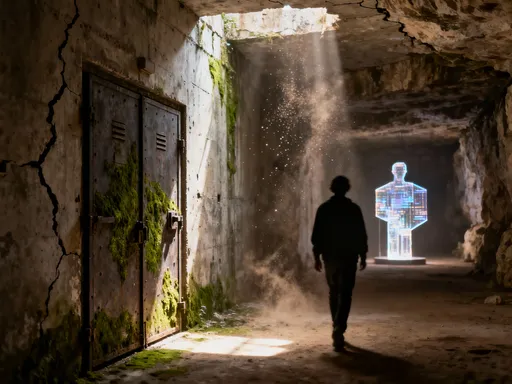
Another compelling example is the adaptive use of underground bunkers from the Yugoslav era. Hidden within forested areas just outside the city, these concrete shelters were originally designed for military command during times of conflict. Today, they serve as dark, meditative spaces for light-based installations and experimental sound art. One project, Signal Lost, invited visitors to navigate the bunker using only handheld lanterns, encountering projections of fragmented messages—poems, radio transmissions, personal letters—that flickered on the walls. The disorientation was intentional, prompting reflection on communication, isolation, and the passage of time.
Even decommissioned lighthouses have found new life. On the nearby Verudela Peninsula, a small beacon tower was transformed into a rotating micro-gallery, hosting single-artist exhibitions visible only through its narrow windows. During daylight hours, passersby could peer inside to see delicate watercolor studies of marine life or minimalist sculptures responding to tidal patterns. At night, the tower itself became part of the artwork, illuminated with colored LEDs that changed with the wind speed and sea temperature. These projects prove that art does not require large budgets or famous names to be powerful—it only requires imagination and a willingness to see beauty in the overlooked.
The Role of Festivals in Shaping Pula’s Art Identity
While Pula’s art spaces operate year-round, seasonal festivals play a crucial role in energizing the city’s creative identity. Events like the Pula Open Air Festival and Makanika Visual Arts Festival act as catalysts, drawing international artists, architects, and performers who temporarily reshape public spaces with bold, interactive works. These gatherings are not mere entertainment—they are invitations to re-see the city, to notice details often ignored, and to participate in the creation of shared meaning.
The Pula Open Air Festival, held each summer, transforms streets, squares, and courtyards into open-air galleries. Large-scale projections map historic buildings with animated visuals that reinterpret their past—Roman columns ripple like water, medieval facades bloom with digital flora, and the amphitheater glows with abstract light patterns synchronized to live music. What makes these interventions powerful is their temporality. Knowing the artwork will disappear in a few days creates a sense of urgency and presence, encouraging people to gather, linger, and share the moment. Families sit on blankets, children point at floating images, and strangers strike up conversations—art becomes a communal event, not a solitary observation.
Makanika, on the other hand, focuses on industrial heritage and mechanical aesthetics. Inspired by Pula’s shipbuilding history, the festival celebrates movement, sound, and kinetic energy. Artists construct large-scale moving sculptures from recycled metal, gears, and salvaged machinery, installing them in former factory yards and dockside warehouses. One memorable piece, The Breathing Machine, stood over three meters tall and mimicked respiratory rhythms using pistons and bellows, powered by wind and solar energy. As it expanded and contracted, it created a low hum that resonated through the space, evoking both industrial power and human vulnerability.
These festivals succeed because they prioritize participation. Visitors aren’t passive observers—they’re encouraged to touch, walk through, and even influence the artworks. At Makanika, children are given tools to help assemble collaborative sculptures; at the Open Air Festival, smartphone apps allow users to alter projection colors in real time. This inclusivity strengthens community bonds and ensures that art remains accessible to all, regardless of background or education. Moreover, the temporary nature of these events leaves behind something lasting: a changed perception of what public space can be.
How to Navigate Pula’s Art Scene Like a Local
Finding Pula’s art spaces doesn’t require a guidebook or VIP access—it requires curiosity and a willingness to wander. Unlike cities where culture is centralized in museums and theaters, Pula’s creative energy is dispersed, hidden in plain sight. The best way to experience it is on foot or by bicycle, moving slowly through neighborhoods, noticing details, and allowing serendipity to guide your path. There’s no single map, but there are reliable starting points and practical strategies that can help you uncover the city’s artistic soul.
Begin at Kino Šola, a cultural hub housed in a repurposed school building. More than just a cinema, it serves as a meeting point for artists, students, and locals, hosting exhibitions, lectures, and film screenings focused on regional culture and social issues. The staff are knowledgeable and happy to share current event listings, including pop-up exhibitions, artist studio openings, and neighborhood festivals. From there, head toward the harbor, where former warehouses now function as artist studios and pop-up galleries. Look for handwritten signs or QR codes on doors—many spaces operate on an appointment or open-door basis, especially during festival seasons.
Timing your visit around local rhythms enhances the experience. Many galleries host opening receptions on Thursday or Friday evenings, when artists are present and wine is poured. These gatherings are informal and welcoming, offering a chance to hear firsthand about the work and connect with creators. Checking community bulletin boards at cafes, libraries, or the tourist information center can reveal lesser-known events—perhaps a poetry reading in a courtyard, a sculpture unveiling in a park, or a sound installation in an old tram car.
For those who prefer structure, self-guided walking routes are increasingly available online. Some focus on architectural art, guiding visitors through historic forts and adaptive reuse projects; others highlight environmental themes, linking installations that respond to the sea, wind, and climate. Accessibility varies—some sites, like Fort Margherita, involve uphill walks and uneven terrain, while others, such as Galerija Lang, are fully accessible. Comfortable shoes, a reusable water bottle, and a spirit of openness are the only essentials. The goal is not to check off a list, but to immerse yourself in the rhythm of the city’s creative life.
Beyond the Canvas: Art That Engages the Senses
In Pula, art is not something you merely look at—it’s something you feel, hear, and sometimes even smell. Many contemporary installations move beyond the visual, embracing multisensory experiences that deepen emotional impact and challenge traditional notions of what an exhibition should be. In old warehouses, seaside pavilions, and repurposed industrial halls, artists design environments that invite touch, movement, and quiet contemplation, transforming passive viewing into embodied engagement.
One particularly memorable installation, Salt Memory, occupied a former fish-processing plant near the port. Inside, hundreds of glass jars filled with seawater and salt crystals lined the walls, each labeled with a handwritten memory contributed by local residents—stories of childhood swims, lost loves, family recipes, and storms survived. Visitors were encouraged to open the jars, releasing subtle briny scents while reading the notes inside. A low-frequency soundscape of waves and distant voices played beneath the floorboards, creating a meditative atmosphere that blurred the line between personal and collective memory.
Other works respond directly to the coastal environment. At a temporary exhibition in an abandoned lifeguard tower, an artist suspended thin strips of recycled fishing line from the ceiling, allowing sea breezes to set them in motion. As the strands swayed and tangled, they cast shifting shadows on the walls, creating an ever-changing visual poem. Nearby, a kinetic sculpture made of driftwood and copper reacted to tidal rhythms, emitting soft chimes when the water level rose. These pieces do not dominate nature—they collaborate with it, acknowledging that the sea, wind, and sun are co-creators in the artistic process.
Tactile engagement is also central to many projects. In a recent exhibition at a disused tram depot, visitors walked barefoot across a floor embedded with textured materials—smooth stone, coarse sand, cool metal, warm wood—each section paired with a different sound composition. Children laughed as they explored, while adults closed their eyes and simply listened and felt. Such works remind us that art is not reserved for the elite or the educated—it belongs to anyone willing to pause, pay attention, and reconnect with their senses.
Why Pula’s Art Movement Matters—And Where It’s Headed
Pula’s emerging art movement is about more than aesthetics—it represents a quiet but powerful form of urban renewal. In a world where many historic cities struggle to balance preservation with progress, Pula offers a compelling alternative: one that values authenticity over spectacle, sustainability over scale, and community over commerce. By investing in independent art spaces, supporting local talent, and reimagining neglected infrastructure, the city is crafting a cultural identity that feels both rooted and forward-looking.
These grassroots efforts have ripple effects. Abandoned buildings gain new purpose, reducing urban decay and fostering civic pride. Artists find platforms to experiment and contribute, strengthening the local economy in subtle but meaningful ways. Tourists, drawn not by crowded attractions but by genuine experiences, stay longer and spend more thoughtfully. Most importantly, residents reclaim ownership of their city’s narrative, seeing it not just as a relic of the past, but as a living, evolving space where creativity can thrive.
Looking ahead, Pula has the potential to become a model for small-city cultural transformation. If it continues to nurture its underground spirit—resisting the temptation to over-commercialize or standardize its offerings—it could inspire similar movements across Europe. Imagine a network of Adriatic cities sharing resources, artists, and ideas, creating a regional renaissance rooted in place-based creativity. With continued support from local institutions, funding bodies, and engaged citizens, Pula’s art scene could evolve into something even greater: a testament to the enduring power of imagination in shaping our shared future.
So the next time you plan a trip to Croatia, don’t just pack your swimsuit and sunscreen. Bring your curiosity, your walking shoes, and your openness to surprise. Because beneath Pula’s ancient stones and sparkling waters lies a creative current waiting to be discovered—one that reminds us how beauty, memory, and innovation can coexist in the most unexpected places.