You Won’t Believe What This City Hides in Plain Sight
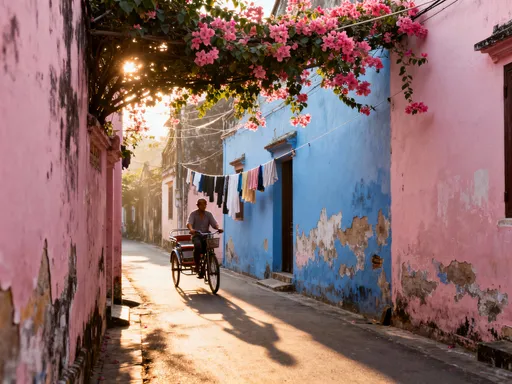
Hue, Vietnam isn’t just about ancient emperors and royal tombs—its urban spaces tell quieter, more intimate stories. As a photographer, I didn’t expect to fall for its weathered alleys, pastel walls, and morning light spilling over motorbikes. This is a city where history lives in the cracks of buildings and everyday life unfolds in vivid color. If you know where to look, Hue’s streets become a living gallery. Unlike the bustling energy of Ho Chi Minh City or the curated charm of Hanoi’s Old Quarter, Hue moves at a gentler pace—one that rewards patience and invites reflection. Here, beauty isn’t staged; it’s lived. And for those willing to wander beyond the guidebook, the city reveals layers of texture, light, and humanity that linger long after departure.
The Soul of a Former Capital – Why Hue’s Urban Landscape Stands Out
Hue’s identity as Vietnam’s imperial capital continues to shape its urban character in ways that are subtle yet profound. From 1802 to 1945, it served as the political and cultural heart of the Nguyen Dynasty, and while the grandeur of the Imperial Citadel still draws visitors, the soul of the city pulses in its neighborhoods. Unlike other Vietnamese cities that have rapidly modernized, Hue has preserved a quiet dignity in its streetscapes—a blend of architectural styles that tells a story of resilience, adaptation, and cultural continuity. The city’s streets are not museum pieces but living spaces, where French colonial villas stand beside centuries-old wooden homes and Buddhist pagodas nestle between residential lanes.
This architectural harmony is not accidental. Hue’s layout reflects a deliberate balance between nature and structure, influenced by feng shui principles that guided its original design. The Perfume River curves gracefully through the city, acting as both a physical and symbolic spine. Along its banks, one can see how the urban fabric responds to the rhythm of daily life—fishermen casting nets at dawn, students cycling to class, elders practicing tai chi under banyan trees. These moments unfold against a backdrop of peeling paint, rusted gates, and overgrown courtyards, creating a visual narrative that feels deeply authentic.
What makes Hue especially compelling for photographers and mindful travelers is this very lack of polish. There’s no attempt to sanitize the city for tourism. Instead, imperfections are embraced—cracked stucco, uneven brickwork, laundry strung between balconies—all contributing to an atmosphere of quiet realism. The city does not perform for the camera; it simply exists. This authenticity offers a rare opportunity to document urban life as it truly is: unscripted, layered, and emotionally resonant. In a world where many destinations cater to Instagram aesthetics, Hue stands apart as a place where beauty emerges from the ordinary.
Chasing Light: Best Times and Spots for Urban Photography
In photography, light shapes everything—and in Hue, the quality of light transforms the city at different hours of the day. Early mornings offer the most delicate illumination, especially along the banks of the Perfume River. As the sun rises behind the Kim Long Bridge, soft golden rays stretch across the water, casting long shadows on stone embankments and gilding the edges of drifting sampans. This is the ideal time to capture reflections—of trees, temples, and the occasional lone fisherman—without the glare of midday sun. The air is still, and the city feels suspended in a moment of calm before the rhythms of daily life fully awaken.
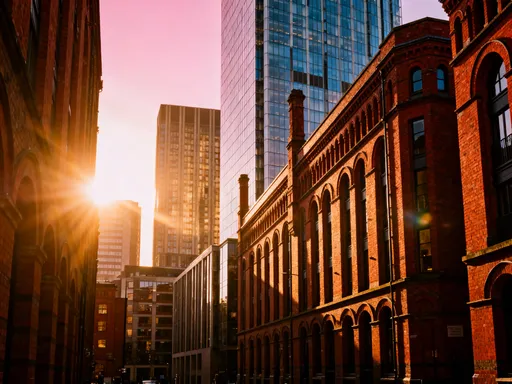
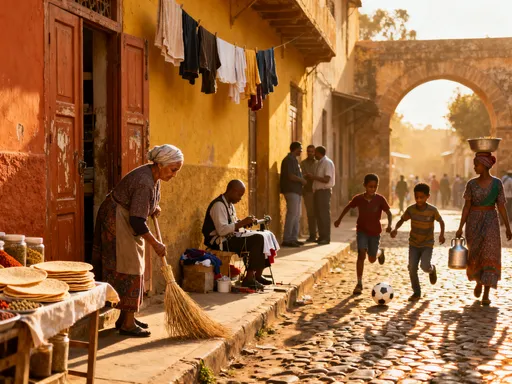
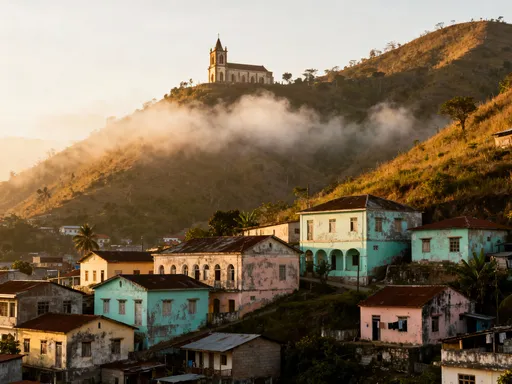
Golden hour, just before sunset, brings a warmer tone to the city’s palette. Areas near Dong Ba Market come alive with rich contrasts—vendors packing up their stalls, bicycles laden with goods, and the last rays catching the faded pastel facades of colonial-era buildings. The low-angle sunlight enhances textures, making peeling paint and weathered wood appear almost luminous. One particularly photogenic stretch lies along Le Loi Street, where bougainvillea spills over wrought-iron balconies and shuttered shopfronts create natural frames for composition. A short walk from there, the alleys near Gia Hoi Bridge offer intimate scenes: a grandmother sweeping her doorstep, a child balancing on a low wall, or a stray cat blinking in the fading glow.
Overcast days, often dismissed by photographers, can be equally rewarding in Hue. When clouds blanket the sky, the light becomes diffused and even, eliminating harsh contrasts and allowing for greater detail in shadowed areas. This is especially useful when photographing narrow alleyways, where direct sunlight might create unbalanced exposures. On such days, colors appear more saturated—turquoise doors, crimson awnings, ochre walls—while the absence of strong shadows allows the eye to focus on patterns and textures. Rain, too, can enhance a scene: puddles form natural mirrors, reflecting fragments of sky, signage, and passing figures, adding a dreamlike quality to urban shots.
The key to capturing Hue’s essence lies not in equipment, but in patience. Some of the most powerful images emerge from waiting—letting a cyclo driver pass through a symmetrical alleyway, allowing a vendor to adjust her basket of fruit just so, or watching sunlight slowly creep across a courtyard until it illuminates a single doorway. These moments cannot be forced. They require stillness, observation, and a willingness to let the city reveal itself. No filters or editing tricks can replicate the authenticity of timing and presence.
Beyond the Citadel: Hidden Corners Most Visitors Miss
While the Imperial Citadel and royal tombs rightfully claim their place on every visitor’s itinerary, the true character of Hue often lies beyond these well-trodden landmarks. Just a few blocks from the main tourist routes, the city unfolds into a network of residential lanes where daily life proceeds with quiet determination. These are the spaces where laundry hangs like banners between homes, where children draw hopscotch grids on sun-warmed pavement, and where the scent of jasmine mingles with the aroma of morning pho from a street cart. These moments, though seemingly mundane, carry the emotional weight of place and belonging.
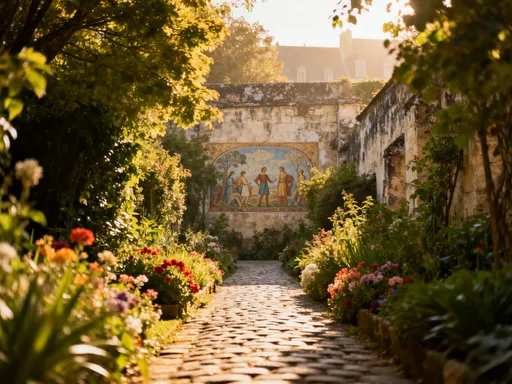
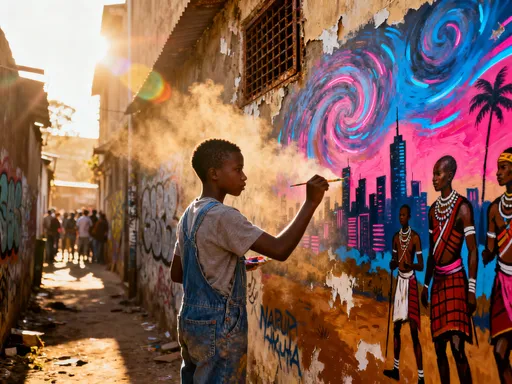
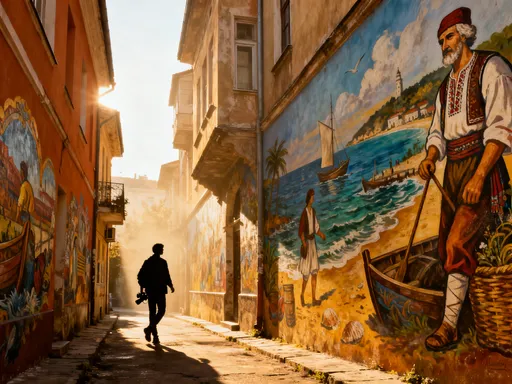
One such hidden corner is the cluster of alleys near the old Hue University campus. Here, time appears to move more slowly. Wooden houses lean gently against one another, their eaves adorned with moss and creeping vines. Faded murals—some political, some whimsical—adorn the walls of abandoned school buildings, their messages softened by years of sun and rain. Communal wells and hand-pump stations still serve some households, offering candid opportunities to photograph residents engaged in routine tasks: filling buckets, washing vegetables, or pausing for conversation. These interactions are not staged; they are the rhythm of community life, and they provide a rare glimpse into a way of living that resists rapid modernization.
Another overlooked area lies along the quieter stretches of the Perfume River, south of the Trang Tien Bridge. Here, fishing families maintain small wooden homes on stilts, their boats tied to rickety docks. Nets hang to dry in the sun, and children play barefoot on weathered planks. The scene is not picturesque in a conventional sense—there is rust, frayed rope, and peeling paint—but it is deeply human. Photographers who take the time to walk these paths often find that the most compelling images arise not from grand vistas, but from small gestures: a woman stirring a pot over a charcoal stove, a dog napping in a patch of shade, or a bicycle resting against a wall, basket full of market greens.
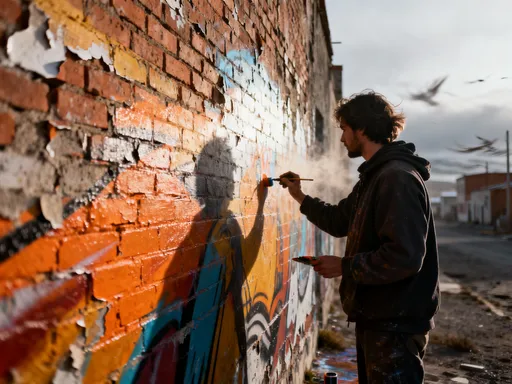
For those seeking a more structured exploration, a recommended walking route begins at the Dong Ba Market and winds through the Gia Hoi neighborhood, then loops back along the riverbank near Kim Long Pagoda. This path avoids major tourist attractions but passes through layers of urban history—French-era homes with shuttered windows, modest family-run shops, and quiet temples tucked behind iron gates. Along the way, one might stumble upon a street artist repairing a faded sign, a group of elders playing cards under a tree, or a schoolgirl adjusting her ao dai before class. These are the moments that make Hue feel personal, not performative—a city that rewards curiosity and quiet observation.
Colors, Textures, and Layers: Reading the City Like a Visual Story
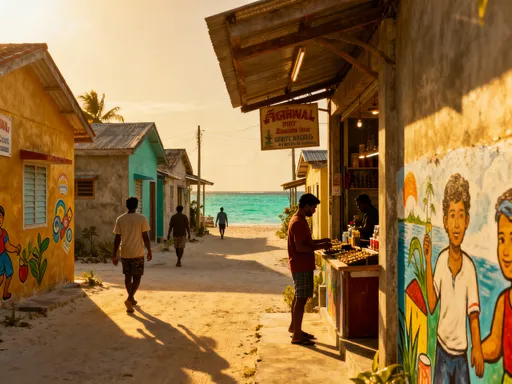
Hue’s visual language is written in color, texture, and layering—each element contributing to a narrative that unfolds over time. The city’s walls, often painted in soft pinks, blues, and yellows, bear the marks of decades: layers of paint peeled away to reveal older coats beneath, like pages in a weathered journal. These surfaces are not flaws to be corrected; they are records of time, each crack and stain telling a story of sun, rain, and resilience. For photographers, they offer a rich canvas of tonal variation and depth, inviting close-up compositions that elevate the ordinary into art.
Rusted metal roofs, corrugated and uneven, catch the light in unpredictable ways. Their surfaces, pitted and oxidized, reflect the passage of seasons and storms. When viewed from below—through the iron grates of a window or the slats of a balcony—they create abstract patterns that shift with the angle of the sun. Similarly, hand-painted signs in Vietnamese script, often done in bold brushstrokes, add a calligraphic energy to storefronts. These signs, sometimes faded or unevenly applied, possess a handmade charm that digital fonts cannot replicate. They are not just identifiers but expressions of individuality and craft.
Composition in Hue benefits from attention to symmetry and reflection. Many of the city’s alleys are narrow and straight, creating natural vanishing points that draw the eye into the frame. After a rain, puddles on cobblestone streets become mirrors, doubling the world above and adding a surreal dimension to urban scenes. Framing shots through doorways, windows, or tree branches can also enhance depth and focus, guiding the viewer’s attention to a specific subject—a child on a bicycle, a steaming bowl of bun bo Hue, or a lone figure walking into the distance.
But perhaps the most powerful visual stories emerge from the smallest details. A chalk drawing on pavement, quickly erased by the next passerby. A cat curled on a windowsill, bathed in afternoon light. A pair of slippers left outside a temple door. These elements, fleeting and unremarkable to some, carry emotional resonance when captured with intention. They remind us that urban life is not just about architecture or landmarks, but about the quiet, repetitive acts that define daily existence. In Hue, photography becomes less about capturing perfection and more about honoring the beauty of impermanence.
People and Places: Capturing Daily Life Without Intrusion
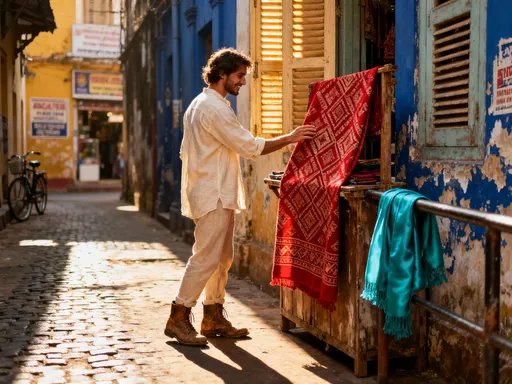
Street photography in Hue is as much about ethics as it is about aesthetics. The city’s neighborhoods are not backdrops for images; they are lived-in spaces, home to families, elders, children, and workers who go about their days with dignity and routine. Approaching these moments with respect is essential. A smile, a nod, or a quiet greeting in Vietnamese—"Xin chao"—can go a long way in establishing trust. When in doubt, it is always better to ask permission, especially when photographing individuals up close or in private settings.
Some of the most compelling images arise from interaction rather than observation alone. A vendor arranging mangoes and dragon fruit at Dong Ba Market may pause to adjust her display, creating a natural composition. Students biking home from Hue University often ride in pairs, their backpacks bouncing with each turn of the pedal—moments of movement that convey energy and youth. Elders playing chess under the canopy of a banyan tree may not mind a discreet photo, especially if greeted first. These scenes gain their power not from drama or spectacle, but from authenticity and mutual respect.
There are times, however, when the camera should remain in the bag. Private moments—someone grieving at a temple, a family dispute on a doorstep, a child crying—should never be photographed without explicit consent. The goal is not to capture everything, but to honor the humanity of the place. In a close-knit community like Hue, where neighbors know one another by name, sensitivity is not just courteous—it is necessary.
When done thoughtfully, street photography can become a form of storytelling that benefits both the photographer and the subject. Some residents appreciate the interest in their lives, especially when visitors take the time to engage rather than merely extract images. A shared cup of coffee, a brief conversation, or a printed photo gifted later can transform a moment of observation into a meaningful exchange. In this way, photography becomes less about possession and more about connection—a way of seeing that is reciprocal and respectful.
Practical Tips for Photographers: Gear, Timing, and Local Etiquette
Photographing Hue does not require expensive equipment. A lightweight mirrorless camera or even a high-quality smartphone is often sufficient to capture the city’s textures and light. The narrow alleys and crowded markets make large gear cumbersome, and a discreet setup helps avoid drawing unnecessary attention. A prime lens with a 35mm or 50mm focal length is ideal for street photography, offering a natural field of view and excellent low-light performance. While tripods are useful for long exposures, they can be impractical in tight spaces and may attract curious onlookers or even requests for payment from informal gatekeepers.
Timing plays a crucial role in planning a photo walk. Early mornings, between 5:30 and 7:30 a.m., offer the best light and the least foot traffic. This is when the city feels most intimate, and spontaneous moments—like a monk collecting alms or a street cleaner sweeping leaves—are most likely to occur. Late afternoons, from 4:30 to 6:30 p.m., provide golden hour opportunities, especially near open areas like the riverbanks or public squares. Midday should be approached with caution; the harsh sunlight can create unflattering contrasts, though overcast days can turn this limitation into an advantage.
Local etiquette varies by neighborhood. In tourist-heavy areas like the Citadel or Thien Mu Pagoda, people are generally accustomed to cameras. However, in residential zones, especially around temples or schools, a more cautious approach is wise. Always observe first: note whether others are photographing, how locals react to visitors, and whether signage restricts photography. In some Buddhist temples, photography inside prayer halls may be prohibited, though exterior shots are usually acceptable.
One of the most rewarding practices is to pair photo walks with local experiences. Stopping at a family-run coffee shop for a ca phe sua da (Vietnamese iced coffee) not only provides a break but also allows time to observe and connect. The slow moments—watching a grandmother fan herself on a porch, listening to the chime of a bicycle bell, or noticing how light falls across a tiled floor—often lead to the most authentic shots. These pauses are not interruptions; they are part of the process. Photography in Hue is not about checking off locations but about immersing oneself in the rhythm of the city.
Why Hue’s Urban Spaces Stay With You – A Lasting Impression
Hue does not reveal itself all at once. Its beauty is understated, emerging slowly through repeated encounters and quiet observation. Unlike destinations that dazzle with neon lights or monumental architecture, Hue whispers. It speaks in the creak of a wooden gate, the flutter of laundry in the breeze, the soft clink of tea cups in a neighborhood shop. These are the sounds and sights that linger in memory, long after the photographs have been edited and shared.
What stays with visitors is not the perfection of a scene, but its authenticity. The city’s worn façades, its uneven streets, its unpolished moments—they all speak of a place that values continuity over novelty, resilience over spectacle. For photographers, Hue offers a lesson in seeing beyond the obvious: in finding grace in routine, meaning in decay, and connection in the everyday. It challenges the impulse to capture the extraordinary and instead invites a deeper engagement with the ordinary.
This is not a city that performs for the lens. It does not demand attention. But for those who walk its lanes with openness and respect, Hue offers something rare: a sense of intimacy with a place that feels both timeless and immediate. The best photographs taken here are not the most technically perfect, but the ones that carry emotion—the ones that, when viewed years later, bring back not just a scene, but a feeling. In a world that often moves too fast, Hue reminds us to slow down, to look closely, and to find wonder in what is already in front of us.